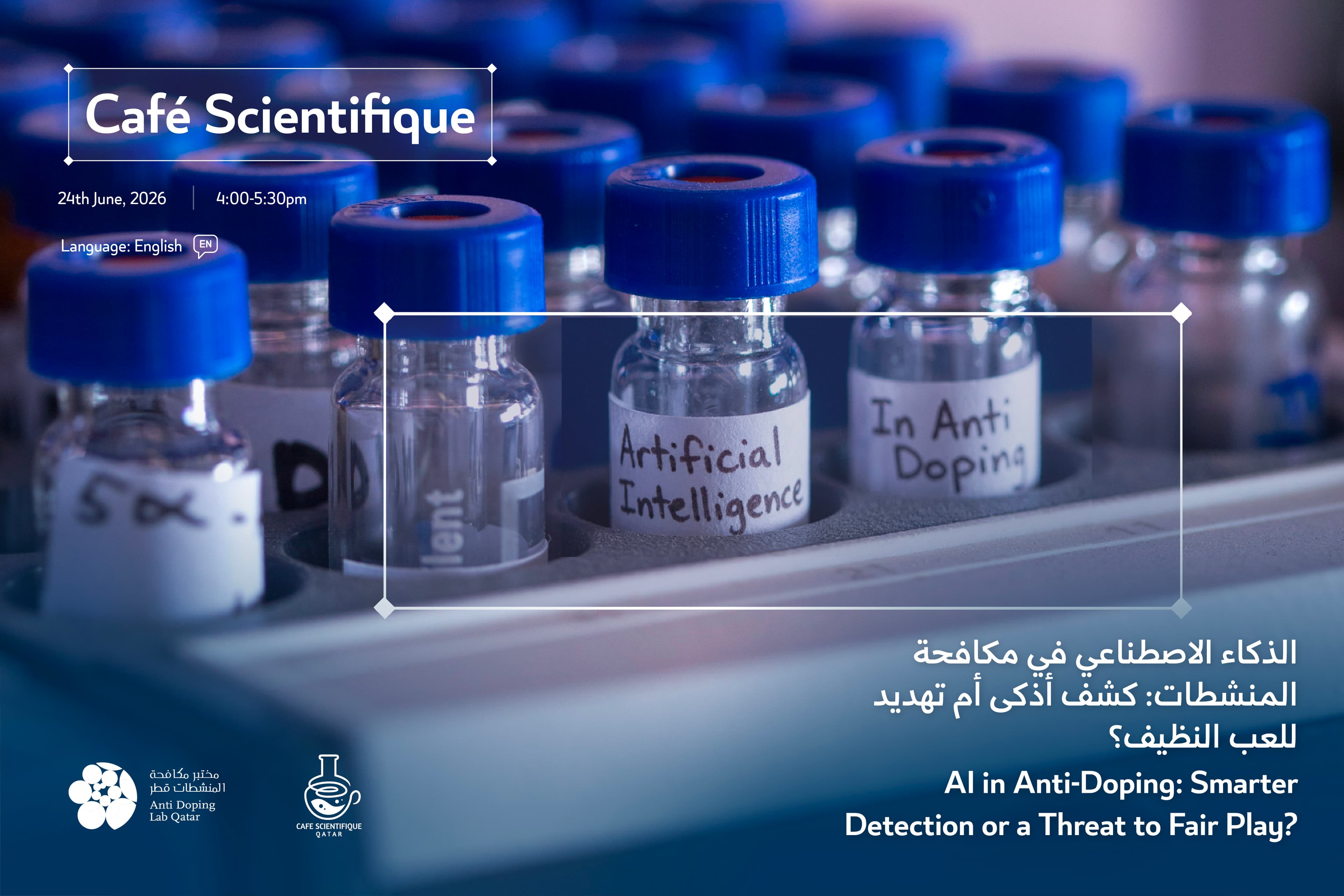
The fight against doping remains one of the most complex and evolving challenges in modern sport. As methods of performance enhancement become increasingly sophisticated, so too must the tools used to detect and deter them. Artificial intelligence is emerging as a powerful addition to the Anti-Doping arsenal, capable of analyzing vast and complex datasets far beyond human capacity. From detecting subtle biological patterns to identifying anomalies in performance trajectories, AI promises to make Anti-Doping efforts more efficient, precise, and proactive. However, these advancements also raise important concerns. Questions of fairness, transparency, data privacy, and the risk of wrongful accusation challenge the legitimacy of AI-driven decisions in sport.
This café Scientifique invites a critical discussion on whether AI represents a breakthrough in protecting clean sport, or whether it introduces new ethical and practical dilemmas that must be carefully managed.
لا تزال معركة مكافحة المنشطات واحدة من أكثر التحديات تعقيداً وتطوراً في الرياضة الحديثة. ومع تزايد تطور أساليب تحسين الأداء، بات من الضروري تطوير الأدوات المستخدمة لكشفها وردعها بنفس الوتيرة. وهنا يبرز الذكاء الاصطناعي كإضافة قوية لترسانة مكافحة المنشطات، بفضل قدرته على تحليل مجموعات بيانات ضخمة ومعقدة تتجاوز بكثير القدرات البشرية.
يعد الذكاء الاصطناعي بجعل جهود مكافحة المنشطات أكثر كفاءة ودقة واستباقية؛ بدءاً من رصد الأنماط البيولوجية الدقيقة، وصولاً إلى تحديد الانحرافات غير الطبيعية في مسارات الأداء الرياضي. ومع ذلك، تثير هذه التطورات مخاوف جوهرية؛ حيث تضع تساؤلات حول العدالة، والشفافية، وخصوصية البيانات، وخطر الاتهام الباطل شرعية القرارات التي يتخذها الذكاء الاصطناعي في المجال الرياضي على المحك.
تدعو هذه الندوة العلمية (Café Scientifique) إلى نقاش نقدي حول ما إذا كان الذكاء الاصطناعي يمثل طفرة حقيقية لحماية الرياضة النزيهة، أم أنه يفرض معضلات أخلاقية وعملية جديدة تتطلب إدارة حذرة ودقيقة